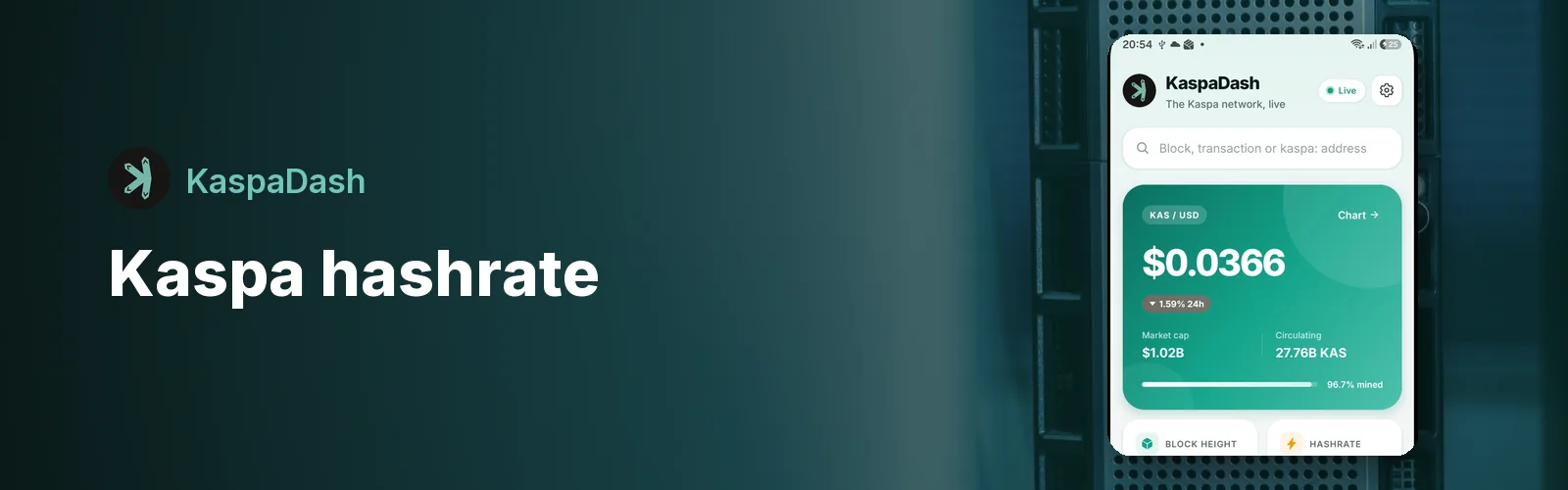
Kaspa hashrate measures the total computing power securing the network. It's one of the best signs of network health: more hashrate means more miners competing, and an attack becomes far more expensive.
The network numbers that matter
- Hashrate: the combined proof-of-work power of all miners, now measured in petahashes per second (PH/s). Comparing it with the all-time high shows whether miners are joining or leaving.
- Difficulty: how hard it is to find a valid block. It adjusts automatically to keep the block rate steady as hashrate changes.
- Block rate: Kaspa targets 10 blocks per second.
- Block reward: the new KAS paid to miners per block, which falls every month. See block reward reduction.
- Block height and DAA score: counters that rise as the network grows.
- Sync status: whether the data source is fully synced with the network, so you know the figures are current.
Check network health in KaspaDash
- Open KaspaDash. The home screen shows block height and hashrate at a glance.
- Open Network for the full view: sync status, live block height, DAA score, hashrate against its all-time high, difficulty, block rate and block reward.

KaspaDash: free Kaspa dashboard for Android
Live KAS price and charts, a real-time block explorer, a wallet watchlist, the whale tracker, supply and reward countdown, and every KRC-20 token. No account and no wallet connection needed.
Download Free on Google PlayHow Kaspa mining works
Kaspa uses proof of work with the kHeavyHash algorithm, mined mostly on dedicated ASIC hardware. Because blocks arrive so quickly, miners get paid in many small rewards instead of rare big ones, and the BlockDAG means blocks found at the same moment are both kept rather than thrown away as orphans. More background in what is Kaspa?